


Tuesday, April 2, 2013


Sunday, March 31, 2013
Venturi

Venturi Solar Electric car

Venturi Fetish Titel

Venturi Automobiles is a French manufacturer of sports cars born under the name of MVS (Manufacture de Voitures de Sport). The original company built high performance mid-engined sports cars, the most well known of which is the Venturi Atlantique, from 1984 until it declared bankruptcy in 2000.
The brand was purchased in 2001. It is now based in Monaco and builds extremely limited production electric vehicles.
True to that claim, the Atlantique 400 GT with a 408 hp (304 kW; 414 PS) V6 delivered excellent performance to put it on par with Ferraris of the early 90s. The 400 GT could hit 100 km/h (62 mph) in 4.7 seconds and 291 km/h (181 mph) top speed, while the 300GT with a 314 PS (231 kW) V6 did 4.9 seconds to 100 km/h (62 mph) and went all the way to 171 mph (275 km/h).
http://moderncar69.blogspot.com/

Saturday, March 9, 2013
Vauxhall
Vauxhall Logo

Vauxhall Vectra

Vauxhall Holden Monaro Red 600
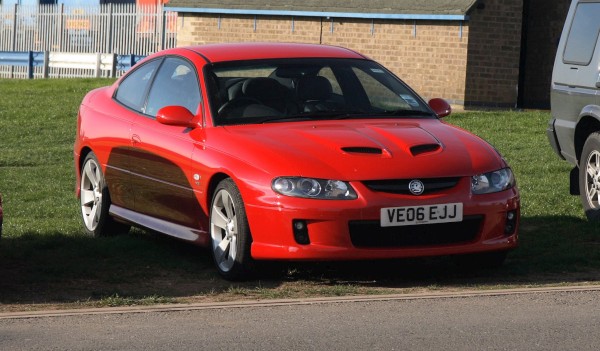
Vauxhall Zafira

Vauxhall Motors is a British automotive company owned by General Motors (GM) and headquartered in Luton. It was founded in 1857 as a pump and marine engine manufacturer, began manufacturing cars in 1903 and was acquired by GM in 1925. It has been the second-largest selling car brand in the UK for over two decades. The current Vauxhall range includes the Agila (city car), Corsa (supermini), Astra (small family car), Insignia (large family car), Meriva (mini MPV) and Zafira Tourer (compact MPV).
The Vauxhall was so far ahead of all other cars of any class that the driver could relax, accomplishing the 200 miles (320 km) at an average speed of 46 mph (74 km/h), when the car was capable of 55 mph (89 km/h). The Y-Type went on to win class E of the Trial.
The Y-Type was so successful that it was decided to put the car into production as the A09 car. This spawned the legendary Vauxhall A-Type. Four distinct types of this were produced between 27 October 1908 – up to when mass production halted in 1914. One last A-Type was put together in 1920. Capable of up to 100 mph (160 km/h), the A-Type Vauxhall was one of the most acclaimed 3 litre cars of its day.
Two cars were entered in the 1910 Prince Henry Trials, and although not outright winners, performed well, and replicas were made for sale officially as the C-type – but now known as the Prince Henry.
http://moderncar69.blogspot.com/

Vauxhall Vectra
Vauxhall Holden Monaro Red 600
Vauxhall Zafira

Vauxhall Motors is a British automotive company owned by General Motors (GM) and headquartered in Luton. It was founded in 1857 as a pump and marine engine manufacturer, began manufacturing cars in 1903 and was acquired by GM in 1925. It has been the second-largest selling car brand in the UK for over two decades. The current Vauxhall range includes the Agila (city car), Corsa (supermini), Astra (small family car), Insignia (large family car), Meriva (mini MPV) and Zafira Tourer (compact MPV).
The Vauxhall was so far ahead of all other cars of any class that the driver could relax, accomplishing the 200 miles (320 km) at an average speed of 46 mph (74 km/h), when the car was capable of 55 mph (89 km/h). The Y-Type went on to win class E of the Trial.
The Y-Type was so successful that it was decided to put the car into production as the A09 car. This spawned the legendary Vauxhall A-Type. Four distinct types of this were produced between 27 October 1908 – up to when mass production halted in 1914. One last A-Type was put together in 1920. Capable of up to 100 mph (160 km/h), the A-Type Vauxhall was one of the most acclaimed 3 litre cars of its day.
Two cars were entered in the 1910 Prince Henry Trials, and although not outright winners, performed well, and replicas were made for sale officially as the C-type – but now known as the Prince Henry.
http://moderncar69.blogspot.com/
Friday, March 8, 2013
Ultima
Ultima Logo

Ultima GTR 720

Ultima Sport MP 158

Ultima Aero

Ultima Racer X Design RZ

Ultima Sports Ltd. is a sports car manufacturer currently based in Hinckley, Leicestershire, England. Founded in 1992 by Ted Marlow, Ultima manufactures the components to construct cars derived, as road going versions, from the Noble Motorsport Ltd originated Ultima racing cars designed by Lee Noble who is more famous now for the models produced by Noble Automotive Ltd.
There are now 2 models in the current Ultima range; the GTR; and the convertible Can-Am. Previous models have been the Sport and Spyder.
All models in the Ultima range have always been primarily supplied in component form. That is, Ultima produces the parts required for an owner/builder to construct the car off-site, and this is the only way to receive such a vehicle in the USA (including a 'rolling body' fully constructed minus engine and transmission). However a few cars are manufactured onsite as "turnkey" models for the European market.
The preferred engine supplier for Ultima is currently American Speed, a company who specializes in re-engineering Chevrolet V8s for increased performance. It was with a 640 hp (480 kW) version of the Chevrolet small block V8 built by American Speed, that Richard Marlow was able to set a number of performance records in an Ultima GTR during 2005, this combination now being dubbed the Ultima GTR640.
In 2006 Ultima beat their own 0-100 mph-0 record set in the GTR640 with the GTR720, again using an American Speed SBC engine but now with 720 hp (540 kW). The new record shaved 0.4 seconds off the time completing the 0-100-0 dash in 9.4 seconds, a new world record for a production road car with street legal tyres and exhaust.
http://moderncar69.blogspot.com/

Ultima GTR 720
Ultima Sport MP 158
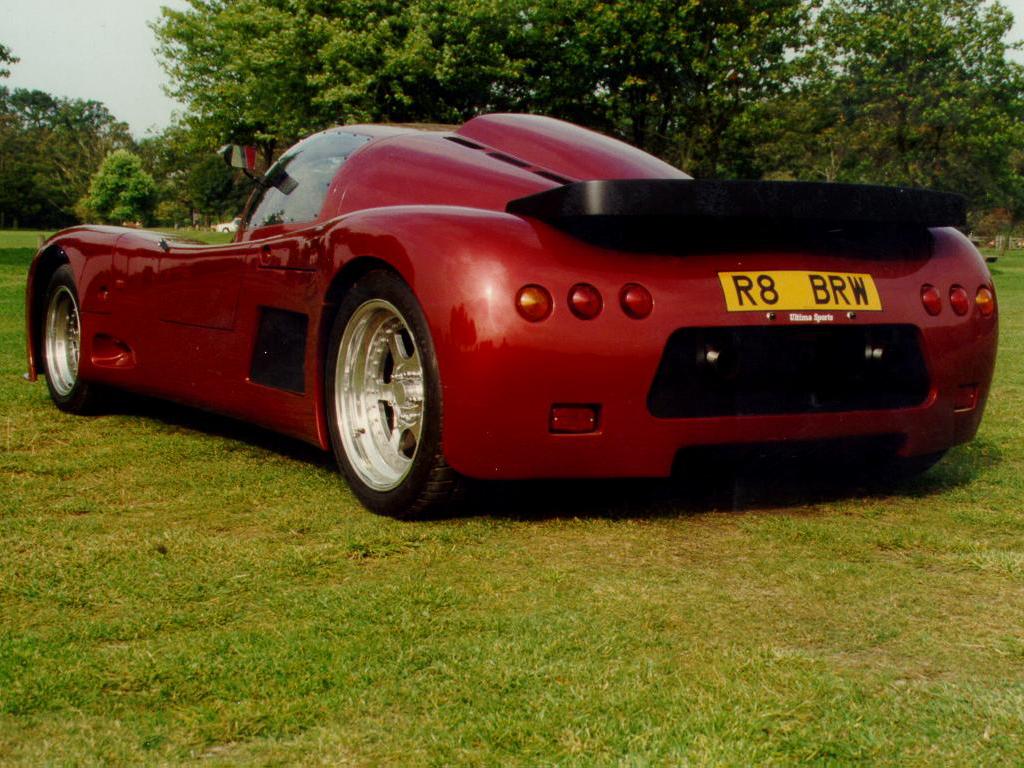
Ultima Aero

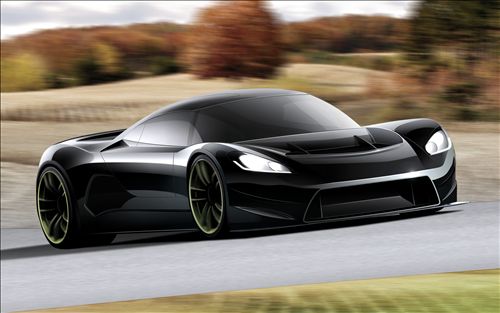
Ultima Racer X Design RZ
Ultima Sports Ltd. is a sports car manufacturer currently based in Hinckley, Leicestershire, England. Founded in 1992 by Ted Marlow, Ultima manufactures the components to construct cars derived, as road going versions, from the Noble Motorsport Ltd originated Ultima racing cars designed by Lee Noble who is more famous now for the models produced by Noble Automotive Ltd.
There are now 2 models in the current Ultima range; the GTR; and the convertible Can-Am. Previous models have been the Sport and Spyder.
All models in the Ultima range have always been primarily supplied in component form. That is, Ultima produces the parts required for an owner/builder to construct the car off-site, and this is the only way to receive such a vehicle in the USA (including a 'rolling body' fully constructed minus engine and transmission). However a few cars are manufactured onsite as "turnkey" models for the European market.
The preferred engine supplier for Ultima is currently American Speed, a company who specializes in re-engineering Chevrolet V8s for increased performance. It was with a 640 hp (480 kW) version of the Chevrolet small block V8 built by American Speed, that Richard Marlow was able to set a number of performance records in an Ultima GTR during 2005, this combination now being dubbed the Ultima GTR640.
In 2006 Ultima beat their own 0-100 mph-0 record set in the GTR640 with the GTR720, again using an American Speed SBC engine but now with 720 hp (540 kW). The new record shaved 0.4 seconds off the time completing the 0-100-0 dash in 9.4 seconds, a new world record for a production road car with street legal tyres and exhaust.
http://moderncar69.blogspot.com/
Thursday, March 7, 2013
Trabant
Trabant Logo

Trabant nT Concept Car

Trabant Limousine

Trabant 601 Mulhouse FRA

Trabant Herpa

The Trabant is a car that was produced by former East German auto maker VEB Sachsenring Automobilwerke Zwickau in Zwickau, Sachsen. It was the most common vehicle in East Germany, and was also exported to countries both inside and outside the communist bloc. The main selling points was that it had room for four adults and luggage in a compact, light and durable shell and that it was fast (when introduced) and durable. With its mediocre performance, inefficient two-stroke engine, noxious fumes and production shortages, the Trabant is often cited as an example of the disadvantages of centralized planning; on the other hand, it is regarded with derisive affection as a symbol of the failed former East Germany and of the fall of communism (in former West Germany, as many East Germans streamed into West Berlin and West Germany in their Trabants after the opening of the Berlin Wall in 1989). It was in production without any significant changes for nearly 30 years with 3,096,099 Trabants produced in total.
Since it could take years for a Trabant to be delivered from the time it was ordered, people who finally got one were very careful with it and usually became skillful in maintaining and repairing it. The lifespan of an average Trabant was 28 years.Used Trabants would often fetch a higher price than new ones, as the former were available immediately, while the latter required the infamous long wait.
There were four principal variants of the Trabant, the P50, also known as the Trabant 500, produced 1957–1962; the Trabant 600, produced 1962–1964; the Trabant 601, produced 1963–1991; and the Trabant 1.1 produced 1990–1991 with a 1,043 cc (63.6 cu in) VW engine (making the "1.1" a slight misnomer). The engine for the Trabant 500, 600 and original 601 was a small two-stroke engine with two cylinders, giving the vehicle modest performance. At the end of production in 1989 it delivered 19 kW (26 horsepower) from a 600 cc (37 cu in) displacement. The car took 21 seconds from 0 to 100 km/h (62 mph) and the top speed was 112 km/h (70 mph). There were two main problems with the engine: the smoky exhaust and the pollution it produced—nine times the amount of hydrocarbons and five times the carbon monoxide emissions of the average European car of 2007. The fuel consumption was 7 l/100 km (40 mpg-imp; 34 mpg-US). Since the engine does not have an oil injection system, two-stroke oil has to be added to the 24-litre (6.3 U.S. gal; 5.3 imp gal) fuel tank every time the car was filled up, at a 50:1 or 33:1 ratio of fuel to oil. Gas stations of the time in countries where two-stroke engines were common served premixed gas-oil mixture from the pump. Today, owners normally carry a container of two-stroke oil in the car for this purpose. The earlier models have no fuel gauge; a dipstick is inserted into the tank to determine how much fuel remains.
The Trabant was a steel monocoque design with roof, bootlid/trunklid, bonnet/hood, bumpers/fenders and doors in Duroplast, a form of plastic containing resin strengthened by wool or cotton. This helped the GDR to avoid expensive steel imports but, in theory, did not provide much crash protection, although in crash tests it allegedly performed superior to some contemporary Western hatchbacks.
Because the car lacked a fuel pump, the fuel tank was placed high up in the engine compartment so that fuel could be fed to the carburettor by gravity; a trade-off of this design is an increased fire risk in front-end accidents. The Trabant was the second car to use Duroplast, after the "pre-Trabant" P70 (Zwickau) model (1954–1959). The duroplast was made of recycled material, cotton waste from Soviet Union and phenol resins from the East German dye industry, making the Trabant the first car with a body made of recycled material.
http://moderncar69.blogspot.com/

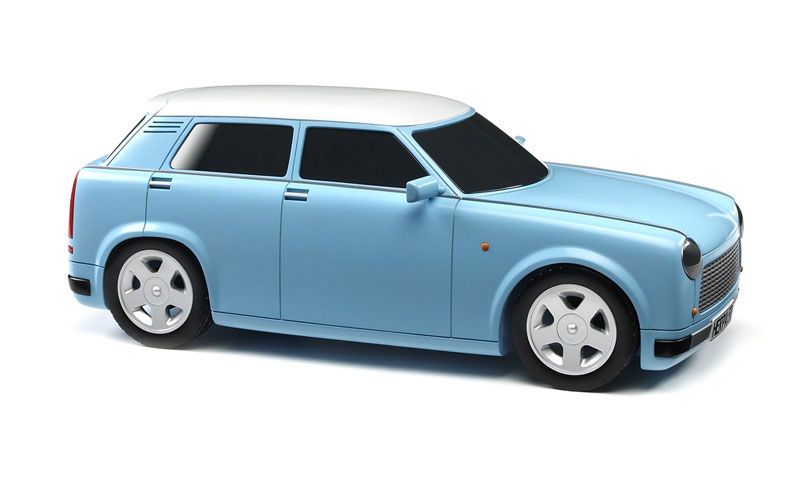
Trabant nT Concept Car
Trabant Limousine
Trabant 601 Mulhouse FRA

Trabant Herpa
The Trabant is a car that was produced by former East German auto maker VEB Sachsenring Automobilwerke Zwickau in Zwickau, Sachsen. It was the most common vehicle in East Germany, and was also exported to countries both inside and outside the communist bloc. The main selling points was that it had room for four adults and luggage in a compact, light and durable shell and that it was fast (when introduced) and durable. With its mediocre performance, inefficient two-stroke engine, noxious fumes and production shortages, the Trabant is often cited as an example of the disadvantages of centralized planning; on the other hand, it is regarded with derisive affection as a symbol of the failed former East Germany and of the fall of communism (in former West Germany, as many East Germans streamed into West Berlin and West Germany in their Trabants after the opening of the Berlin Wall in 1989). It was in production without any significant changes for nearly 30 years with 3,096,099 Trabants produced in total.
Since it could take years for a Trabant to be delivered from the time it was ordered, people who finally got one were very careful with it and usually became skillful in maintaining and repairing it. The lifespan of an average Trabant was 28 years.Used Trabants would often fetch a higher price than new ones, as the former were available immediately, while the latter required the infamous long wait.
There were four principal variants of the Trabant, the P50, also known as the Trabant 500, produced 1957–1962; the Trabant 600, produced 1962–1964; the Trabant 601, produced 1963–1991; and the Trabant 1.1 produced 1990–1991 with a 1,043 cc (63.6 cu in) VW engine (making the "1.1" a slight misnomer). The engine for the Trabant 500, 600 and original 601 was a small two-stroke engine with two cylinders, giving the vehicle modest performance. At the end of production in 1989 it delivered 19 kW (26 horsepower) from a 600 cc (37 cu in) displacement. The car took 21 seconds from 0 to 100 km/h (62 mph) and the top speed was 112 km/h (70 mph). There were two main problems with the engine: the smoky exhaust and the pollution it produced—nine times the amount of hydrocarbons and five times the carbon monoxide emissions of the average European car of 2007. The fuel consumption was 7 l/100 km (40 mpg-imp; 34 mpg-US). Since the engine does not have an oil injection system, two-stroke oil has to be added to the 24-litre (6.3 U.S. gal; 5.3 imp gal) fuel tank every time the car was filled up, at a 50:1 or 33:1 ratio of fuel to oil. Gas stations of the time in countries where two-stroke engines were common served premixed gas-oil mixture from the pump. Today, owners normally carry a container of two-stroke oil in the car for this purpose. The earlier models have no fuel gauge; a dipstick is inserted into the tank to determine how much fuel remains.
The Trabant was a steel monocoque design with roof, bootlid/trunklid, bonnet/hood, bumpers/fenders and doors in Duroplast, a form of plastic containing resin strengthened by wool or cotton. This helped the GDR to avoid expensive steel imports but, in theory, did not provide much crash protection, although in crash tests it allegedly performed superior to some contemporary Western hatchbacks.
Because the car lacked a fuel pump, the fuel tank was placed high up in the engine compartment so that fuel could be fed to the carburettor by gravity; a trade-off of this design is an increased fire risk in front-end accidents. The Trabant was the second car to use Duroplast, after the "pre-Trabant" P70 (Zwickau) model (1954–1959). The duroplast was made of recycled material, cotton waste from Soviet Union and phenol resins from the East German dye industry, making the Trabant the first car with a body made of recycled material.
http://moderncar69.blogspot.com/
Wednesday, March 6, 2013
Toyota
Toyota Car Logo

Toyota Corolla

Toyota Prius RR

Toyota FT 86 Concept Sporty Car

Toyota Fortuner

Toyota Motor Corporation commonly known simply as Toyota and abbreviated as TMC, is a multinational automaker headquartered in Toyota, Aichi, Japan. In 2010, Toyota Motor Corporation employed 317,734 people worldwide and was the world's largest automobile manufacturer by production.
The company was founded by Kiichiro Toyoda in 1937 as a spinoff from his father's company Toyota Industries to create automobiles. Three years earlier, in 1934, while still a department of Toyota Industries, it created its first product, the Type A engine, and, in 1936, its first passenger car, the Toyota AA. Toyota Motor Corporation group companies are Toyota (including the Scion brand), Lexus, Daihatsu and Hino Motors along with several "non-automotive" companies. TMC is part of the Toyota Group, one of the largest conglomerates in the world.
Toyota is one of the largest companies to push hybrid vehicles in the market and the first to commercially mass-produce and sell such vehicles, an example being the Toyota Prius. The company eventually began providing this option on the main smaller cars such as Camry and later with the Lexus divisions, producing some hybrid luxury vehicles. It labeled such technology in Toyota cars as "Hybrid Synergy Drive" and in Lexus versions as "Lexus Hybrid Drive."
The Prius has become the top selling hybrid car in America. Toyota, as a brand, now has four hybrid vehicles in its lineup: the Prius, Auris, Highlander, and Camry. The popular minivan Toyota Sienna is scheduled to join the hybrid lineup by 2010, and by 2030 Toyota plans to offer its entire lineup of cars, trucks, and SUVs with a Hybrid Synergy Drive option (Toyota has said it plans to make a hybrid-electric system available on every vehicle it sells worldwide sometime in the 2010s).
Worldwide sales of hybrid vehicles produced by Toyota reached 1.0 million vehicles by May 31, 2007, and the 2.0 million mark was reached by August 31, 2009, with hybrids sold in 50 countries. Toyota's hybrid sales are led by the Prius, with worldwide cumulative sales of 1.43 million by August 2009.[50] Toyota's CEO has committed to eventually making every car of the company a hybrid vehicle. Lexus also has their own hybrid lineup, consisting of the GS 450h, RX 400h, and launched in 2007, the LS 600h/LS 600h L.
Toyota and Honda have already said they've halved the incremental cost of electric hybrids and see cost parity in the future (even without incentives). Hybrids are viewed by some automobile makers as a core segment of the future vehicle market.
Toyota implemented its Fourth Environmental Action Plan in 2005. The plan contains four major themes involving the environment and the corporation's development, design, production, and sales. The five-year plan is directed at the, "arrival of a revitalized recycling-based society. Toyota had previously released its Eco-Vehicle Assessment System (Eco-VAS) which is a systematic life cycle assessment of the effect a vehicle will have on the environment including production, usage, and disposal. The assessment includes fuel efficiency, emissions and noise during vehicle use, the disposal recovery rate, the reduction of substances of environmental concern, and CO2 emissions throughout the life cycle of the vehicle from production to disposal. 2008 marks the ninth year for Toyota's Environmental Activities Grant Program which has been implemented every year since 2000. Themes of the 2008 program consist of "Global Warming Countermeasures" and "Biodiversity Conservation.
http://moderncar69.blogspot.com/

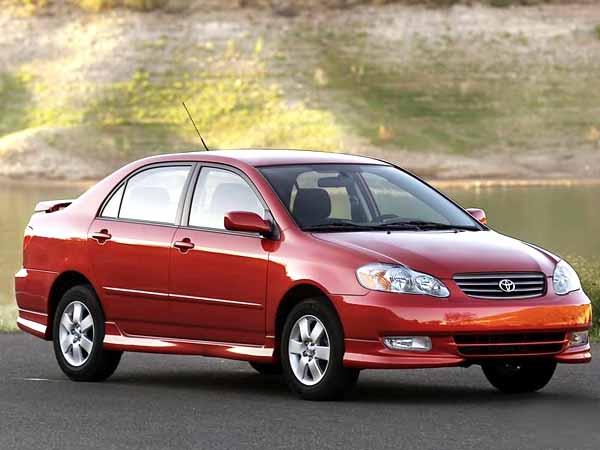
Toyota Corolla
Toyota Prius RR

Toyota FT 86 Concept Sporty Car

Toyota Fortuner

Toyota Motor Corporation commonly known simply as Toyota and abbreviated as TMC, is a multinational automaker headquartered in Toyota, Aichi, Japan. In 2010, Toyota Motor Corporation employed 317,734 people worldwide and was the world's largest automobile manufacturer by production.
The company was founded by Kiichiro Toyoda in 1937 as a spinoff from his father's company Toyota Industries to create automobiles. Three years earlier, in 1934, while still a department of Toyota Industries, it created its first product, the Type A engine, and, in 1936, its first passenger car, the Toyota AA. Toyota Motor Corporation group companies are Toyota (including the Scion brand), Lexus, Daihatsu and Hino Motors along with several "non-automotive" companies. TMC is part of the Toyota Group, one of the largest conglomerates in the world.
Toyota is one of the largest companies to push hybrid vehicles in the market and the first to commercially mass-produce and sell such vehicles, an example being the Toyota Prius. The company eventually began providing this option on the main smaller cars such as Camry and later with the Lexus divisions, producing some hybrid luxury vehicles. It labeled such technology in Toyota cars as "Hybrid Synergy Drive" and in Lexus versions as "Lexus Hybrid Drive."
The Prius has become the top selling hybrid car in America. Toyota, as a brand, now has four hybrid vehicles in its lineup: the Prius, Auris, Highlander, and Camry. The popular minivan Toyota Sienna is scheduled to join the hybrid lineup by 2010, and by 2030 Toyota plans to offer its entire lineup of cars, trucks, and SUVs with a Hybrid Synergy Drive option (Toyota has said it plans to make a hybrid-electric system available on every vehicle it sells worldwide sometime in the 2010s).
Worldwide sales of hybrid vehicles produced by Toyota reached 1.0 million vehicles by May 31, 2007, and the 2.0 million mark was reached by August 31, 2009, with hybrids sold in 50 countries. Toyota's hybrid sales are led by the Prius, with worldwide cumulative sales of 1.43 million by August 2009.[50] Toyota's CEO has committed to eventually making every car of the company a hybrid vehicle. Lexus also has their own hybrid lineup, consisting of the GS 450h, RX 400h, and launched in 2007, the LS 600h/LS 600h L.
Toyota and Honda have already said they've halved the incremental cost of electric hybrids and see cost parity in the future (even without incentives). Hybrids are viewed by some automobile makers as a core segment of the future vehicle market.
Toyota implemented its Fourth Environmental Action Plan in 2005. The plan contains four major themes involving the environment and the corporation's development, design, production, and sales. The five-year plan is directed at the, "arrival of a revitalized recycling-based society. Toyota had previously released its Eco-Vehicle Assessment System (Eco-VAS) which is a systematic life cycle assessment of the effect a vehicle will have on the environment including production, usage, and disposal. The assessment includes fuel efficiency, emissions and noise during vehicle use, the disposal recovery rate, the reduction of substances of environmental concern, and CO2 emissions throughout the life cycle of the vehicle from production to disposal. 2008 marks the ninth year for Toyota's Environmental Activities Grant Program which has been implemented every year since 2000. Themes of the 2008 program consist of "Global Warming Countermeasures" and "Biodiversity Conservation.
http://moderncar69.blogspot.com/
Subscribe to:
Posts (Atom)


